
Luke Skywalker is a deconstructing exvangelical at the start of Episode 8. But he doesn’t stay there.
3 Things We Can Learn About Unhealthy Deconstruction from Star Wars: The Last Jedi

I have a friend who I haven’t spoken to in a little while. Let’s call this person Lucy.
Lucy has been deconstructing her faith over the past few years. And not in a positive “I’m rediscovering the real Jesus” way, which I think/hope most Christians experience at some point in their faith journeys. From what I can tell, Lucy is completely rejecting all spirituality. Lucy seems done with Christianity in general and evangelicalism in particular. I think the term “exvangelical” would be quite apt for her.
Lucy also hated how Luke Skywalker was portrayed in Star Wars Episode VIII: The Last Jedi.
That might seem like an irrelevant bit of trivia, but I actually think there is an ironic connection here. Let me explain.
While some people thought The Last Jedi (TLJ) was too “woke,” Lucy didn’t mind that. Instead, Lucy thought that TLJ’s director Rian Jones had disrespected the character of Luke Skywalker. Instead of a heroic, cheery, peppy, adventurer who swoops in and saves the day, The Last Jedi gives us a Luke that is defeated, depressed, and despondent.
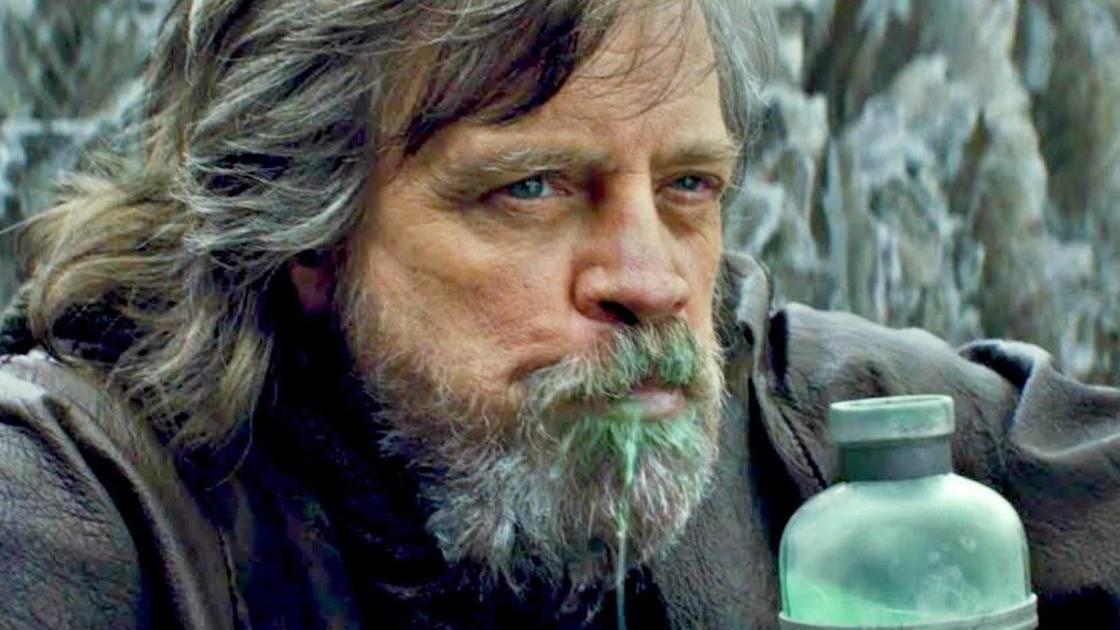
My friend’s failure to appreciate Luke’s character arc in TLJ is sadly ironic, because I think TLJ gives us a picture of what unhealthy spiritual deconstruction can look like, as well as a more healthy alternative.
If Lucy had been willing to learn character of Luke Skywalker in 2017 when The Last Jedi came out, perhaps she might have had a better faith journey these last few years.
Now, I’m not trying to tell people what films they should like or don’t like. It is possible to dislike The Last Jedi and still love Jesus (and vice versa)! But I do think Luke’s character gives us a great look at what unhealthy spiritual deconstruction sometimes looks like.
(Please note: I also don’t want to pick on anyone who is deconstructing. I have tons of empathy with those who do deconstruct their faith, particularly those who have suffered abuse, trauma etc., and I think there are often valid reasons to do so. I myself went through a period of spiritual reconstruction in college, so I don’t want this piece to come across as a judgment on everyone who deconstructs. However, I do think some people who are totally walking away from Jesus are accidentally throwing out the baby with the bathwater. There’s a whole lot more to Jesus beyond just what some Americans Christians say about him.)
#1. Unhealthy Luke thinks that just because he failed and had a bad experience as a Jedi, then no one else should be a Jedi either.
Healthy Luke learns that there are some good things about the Jedi that are important to pass on to the next generation.
When Rey first comes to Luke, asking him to return and save the galaxy, he tosses her request aside. Luke tells Rey that he has come to this island to die–and that in fact, it’s time for the entire Jedi religion to die.1
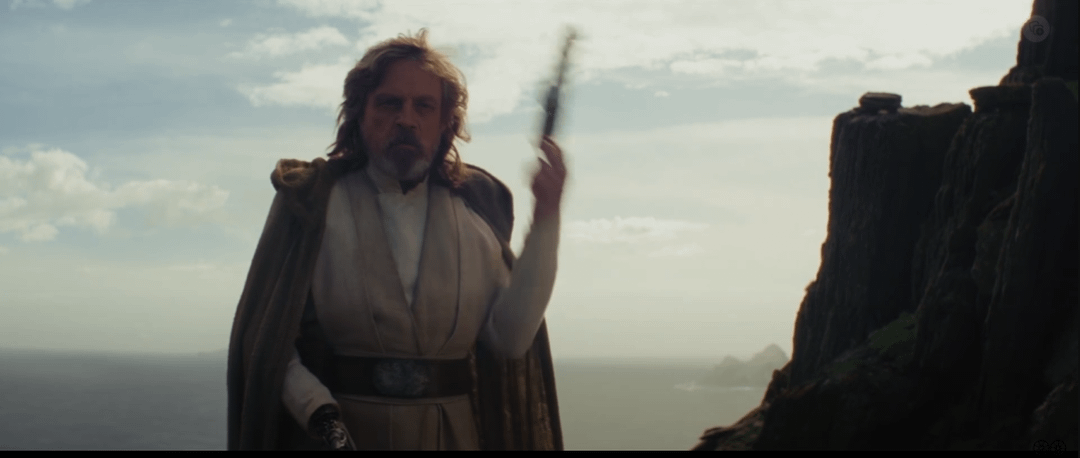
Luke finally agrees to give Rey some cursory training, though with a caveat, “I will teach you the ways of the Jedi... and why they need to end.”
By the end of the movie though, a more healthy Luke sacrifices his life in order to let Rey and the Resistance escape the clutches of the evil First Order. He declares that he will not be the last Jedi - the baton has now been passed to Rey.
Some deconstructing Christians feel so hurt by the Church, that they would rather see no one else even start on a faith journey. Sometimes this is due to trauma, anger, fear, or other strong emotions. These feelings are understandable. But I believe that a more healthy approach is to realize there is some good in the Church, and that we must allow the next generation to find their own path (including by helping them learn from our own mistakes).
#2. Unhealthy Luke has a narrow fixation on a set of ancient texts that he hasn’t even bothered to read.
Healthy Rey takes the texts and wrestles with them on her own.
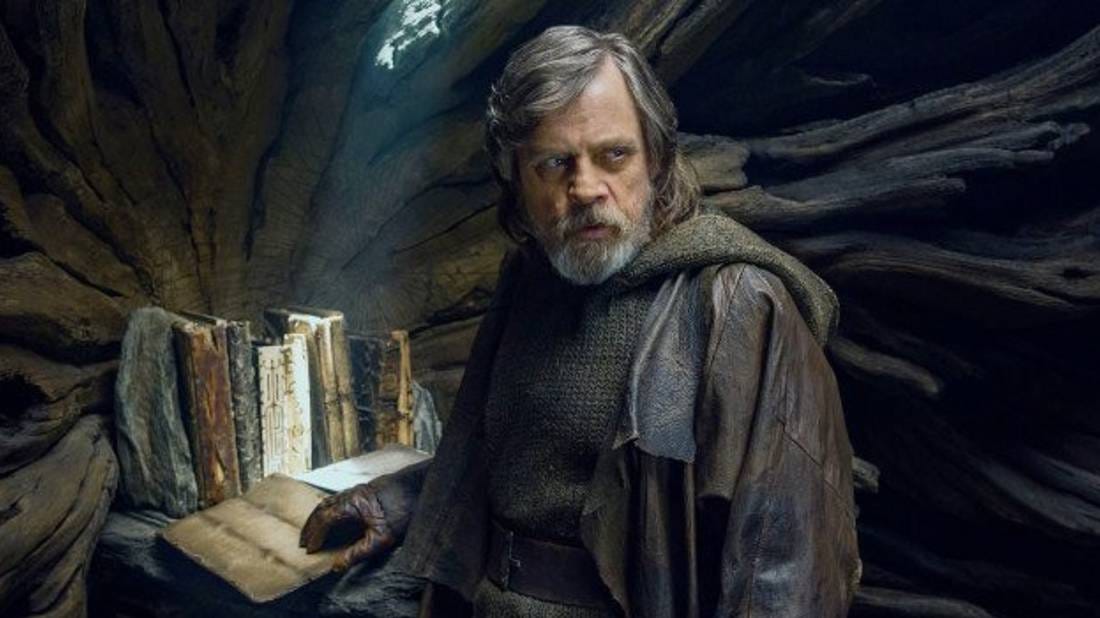
Back when she was still a practicing Christian, my old friend Lucy had a specific way of reading Scripture. It tended to be rigid and formulaic, where there was one “right” answer to every question.
In my opinion, that approach inevitably leads to a very brittle and fragile faith. The Bible is not a black-and-white textbook where everything is laid out perfectly clear. Reading Scripture requires wisdom, insight, wrestling, conversations, historical and contemporary perspectives, and (most importantly) the guidance of the Holy Spirit.
Similarly, Luke Skywalker in TLJ seems to fetishize the ancient Jedi texts. In a pique of rage, he threatens to burn down the Jedi library, but can’t do it. Yoda, as a Force Ghost, pops up and fires a lightning bolt at the library, burning it down for him. Luke exclaims, “The sacred Jedi texts!” “Oh, read them, have you?” Yoda replies. Luke pauses, then shakes his head. Yoda continues: “Page turners, they were not. Wisdom they had, but that library contains nothing that the girl Rey does not already possess.”
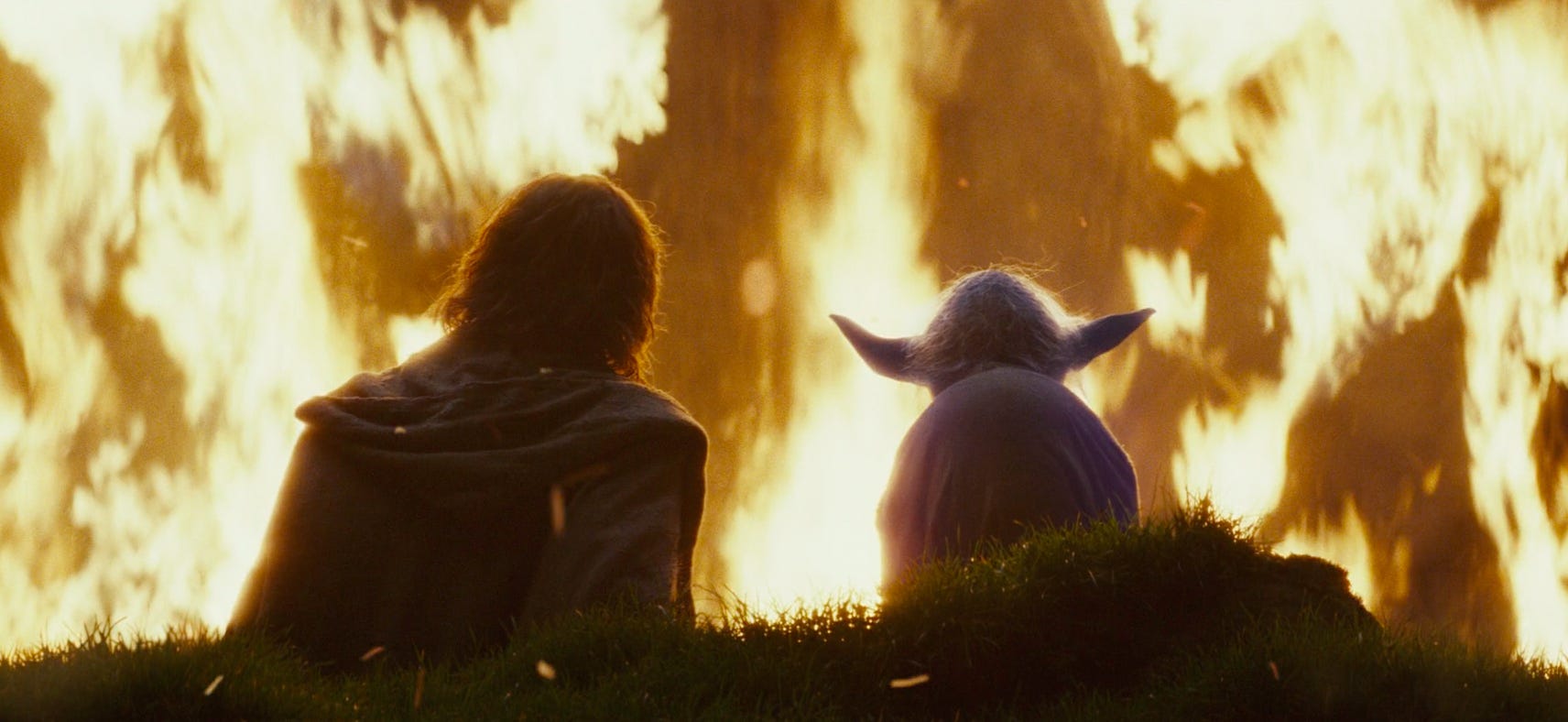
Later in the film, we learn that Rey has secretly taken the old Jedi scrolls, and (unlike Luke) she will diligently study them in her future Jedi training under Leia. Despite Luke’s dogmatic and rigid view of the Jedi texts, it seems like he doesn’t really know how to interact with them. He wants to protect them, but he hasn’t even read them. He has a rigid view of what he thinks they say, but he’s given up on trying to live them out. He views them as the central depository of the Jedi religion, not realizing the Jedi ways are passed down by people, not books.
I think Luke’s view of the ancient Jedi texts is, unfortunately, a bit similar to the fundamentalist way my friend Lucy viewed the Bible. A rigid understanding of what this collection of holy writings is, can ultimately lead to a crisis of faith when the questions got too hard.
#3 Unhealthy Luke thinks that what’s expected of a Jedi is to be a flat, one-dimensional hero that rushes in, kills the bad guys, and saves the day.
Healthy Luke realizes that Jedi can be flawed, multidimensional, and counter-cultural while still being heroic
The legendary Luke Skywalker from the original 1980s Star Wars films was a hopeful, daring, dashing young man who never hesitated to rush in to save his friends.2 In TLJ, we see Luke wrestling with brokenness, doubt, grief, and sorrow. We learn that this guilt stems from Luke rushing in to aggressively confront a struggling Ben Solo, which goes badly and contributes to Ben’s fall to the dark side.
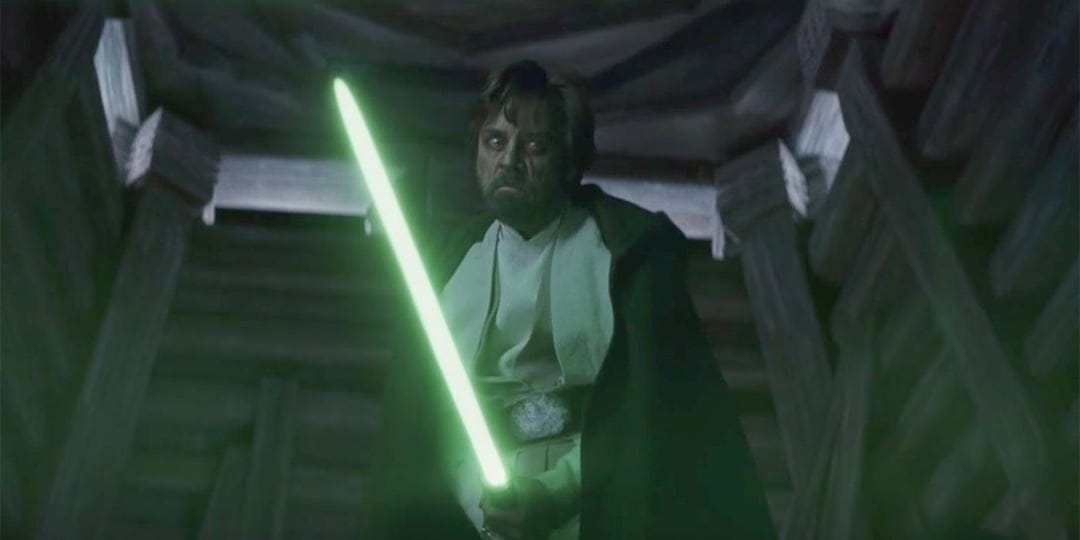
Grieved at his errors, Luke Skywalker exiles himself to a remote, monastic island. If he can’t be the hero he’s supposed to be, he figures he may as well die. When Rey comes to bring Luke back to help the Resistance, he spits the idea back in her face: “You think what? I'm gonna walk out with a laser sword and face down the whole First Order? What did you think was going to happen here? Go away.” Luke has thrown away his lightsaber, both literally and metaphorically.
By the end of TLJ, however, facing down the First Order is exactly what Luke does- but not in the way anyone expects. In a surprise twist, Luke uses the full extent of his Force powers to deceive the First Order into focusing all of their weaponry on him. Luke takes the worst they can give, absorbs it, and uses his presence as a distraction to allow the Resistance fighters to escape. Instead of being a cartoonish action hero, Luke is a true hero–ultimately sacrificing his life so that the rebellion against empire can continue.
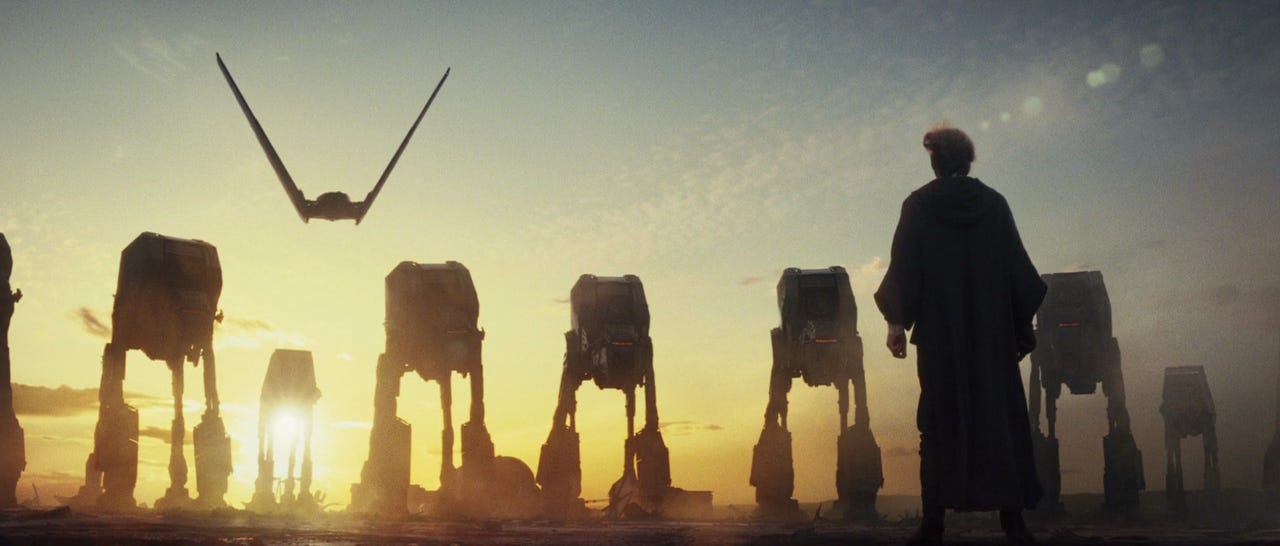
The Jedi way, at its core, is meant to be about defense, not attack. In his dying moments, Luke illustrates that perfectly. He has rediscovered and reconstructed what it truly means to be a Jedi, not just what the galaxy expected of him.
Similarly, some Christians think there is only one correct way to be a Christian: You have to be loud, aggressive, brash, Republican, traditional, MAGA etc. Some exvangelicals say, “I reject those things, so I reject Christianity.”
But a more correct perspective is to realize: those things are not at the core of what it means to be a Christian. It is possible to be Christian and quiet, peaceful, humble, Democrat, non-traditional, liberal, etc.
I wonder if Lucy had realized this sooner, if she would have been able to reconstruct her faith rather than throwing it out altogether.
Conclusion
I am sure there are other examples from the film that could relate to some exvangelical’s journeys. 3 But for now, I hope you can see my point.
Everyone’s spiritual journey is different. But The Last Jedi shows us what unhealthy spiritual deconstruction can sometimes look like, as well a more healthy alternative. If you haven’t seen TLJ in a while, I invite you to watch it again with these themes in mind.
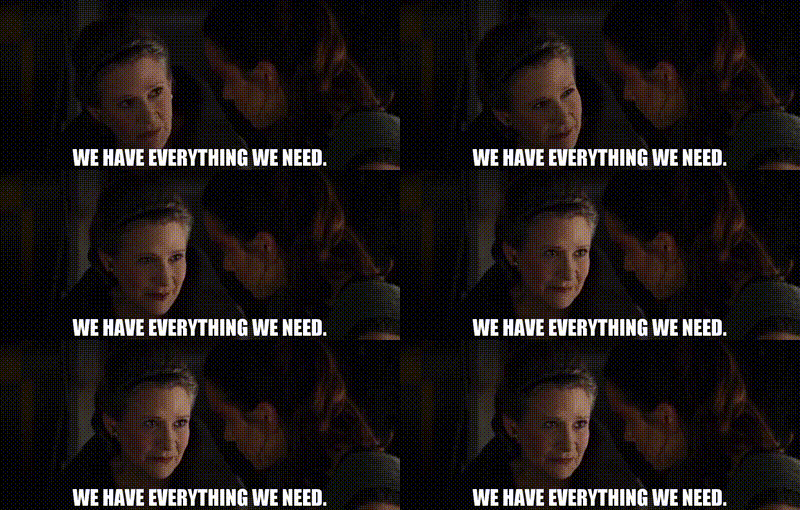
And if you’re struggling in your own faith journey, and wondering if having just a crumb of faith is enough, I want to leave you with a closing quote from Princess Leia. Rey asks her, looking around a the handful of survivors huddled in the Millennium Falcon. “How do we build a Rebellion from this?” Leia replies,
Ironically, the villain Kylo Ren tells Rey the same thing later on: “It's time to let old things die. Snoke...Skywalker. The Sith... the Jedi, the Rebels... let it all die. Rey, I want you to join me. We can rule together and bring a new order to the galaxy.” Luke and Kylo both want to see the destruction of the old moral order. Rey, on the other hand, commits to seeing the legacy of the Jedi live on-in a more healthy way.
I’m not sure this actually matches the portrayal of Luke in the full Original Trilogy, but that’s a different conversation.
For example:
Unhealthy Luke cuts himself off from the Force entirely. Healthy Luke re-engages with spiritual rhythms.
Unhealthy Luke can’t get over his own failures and the failures of the Jedi. Healthy Luke learns that his failures are meant to help instruct the next generation.
Unhealthy Luke is too scared of his own darkness. Healthy Luke is willing to face it, own it, and overcome it.
For more, see this Reddit thread.
For more of my writings about Star Wars, see these posts:
https://atberg.substack.com/p/star-wars-ring-theory-whats-really
https://atberg.substack.com/p/jesus-star-wars-and-the-myth-of-redemptive
https://atberg.substack.com/p/whos-ever-ready-poes-leadership-development-in-the-sequel-trilogy
https://atberg.substack.com/p/moral-confusion-and-role-of-chosen-onehtml
I can't speak for Lucy, obviously. But I would hazard a guess that her dissatisfaction with The Last Jedi as a text because of what it does to Luke Skywalker isn't because she necessarily disagrees with the premise of his spiritual arc so much as it kind of comes out of nowhere if the last that you'd seen of him was in Return of the Jedi. A lot of pretty significant stuff happened to Luke between those movies. He tried to kill his own nephew, for pity's sake.
But instead of making any effort to contextualize the radical change in Luke's character, The Last Jedi just expects us to uncritically accept that Luke inexplicably turned into a miserable curmudgeon and just as inexplicably turned back to the light at the last minute. Sure, it COULD have been a good character arc, if Luke was given more than the bare minimum exposition. The core problem was, Johnson obviously started out with this theme without really taking into account what would be necessary to convincingly give Luke such a severe crisis of faith.
Trying to read the Last Jedi or the sequel trilogy as its own text doesn't really help with that either. The only reason for Rey or the audience to assume Luke was willing to help in the first place was because of the preexisting image of the character. It's a layered problem that's only compounded by Rey herself being a bit of Mary Sue who just seems to be doing the same character arc as Luke in the original trilogy except far more hypercompetently without any of the moments of humility and doubt that made Luke so compelling.